
AI SEO in 2026: How Artificial Intelligence is Changing Google Rankings
Introduction
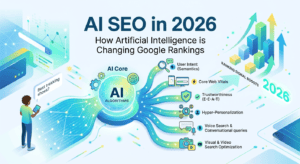
If you have spent any time looking at Google rankings over the ten years you know that Search Engine Optimization is always changing. But what we are seeing in 2026 is not a small change. It is a big change in how search engines find look at and show information.
For a time the way to do Search Engine Optimization was pretty simple: find the right keywords identify phrases that people search for a lot make your metadata better write long articles and get other websites to link to yours.. Now just doing these things is not enough. Googles artificial intelligence is getting much better. Their new algorithms, like the ones using Gemini models and something called Generative Engine Optimization have changed how search engines work.
Here is a closer look at how artificial intelligence’s changing Google rankings, in 2026 and what people who make content, marketers and businesses need to do to keep being seen on Google without paying for it.
1. The Death of Keyword Density: Semantic Intent & Entities
In 2026 search algorithms do not see web pages as a collection of keywords. Googles computer systems use Natural Language Processing to figure out what people are really looking for. They consider the context and what the user actually wants and how things are related in the world like people, places and products.
How Search Intent Has Changed:
The Old Way of Searching: people would search for “running shoes for men”.
The New Way of Searching in 2026: people search for “Which running shoesre best for someone who runs marathons and has flat feet and costs less than $120?”
Now people ask search engines complicated questions. They ask questions with parts. When Google gets a question it breaks it down into parts. Then it looks for answers to each part. Puts them together to make a complete answer.
The Main Plan: do not just make a page about one keyword, Semantic Intent & Entities. You need to make your page an expert on a topic Semantic Intent & Entities. Answer all the questions that people might have about your topic, Semantic Intent & Entities. This way search algorithms will see your page as a resource on Semantic Intent & Entities. You need to build what is called Topical Authority on your topic Semantic Intent & Entities. This means you answer every question about your topic, Semantic Intent & Entities so search algorithms know your page is the place to go for information, on that topic Semantic Intent & Entities.
2. Figuring Out Zero-Click Searches And Generative Engine Optimization
We can see from the numbers that zero-click searches are getting really popular. Than 60% of the time people get their answers right on the Search Engine Results Page without even clicking on a link.
The Google AI Overview box is at the top of the Search Engine Results Page. It gives people summaries, comparisons and steps to follow. Because of this the way we do search engine optimization has changed. It is not about being number one on the list. Now we want to be inside the AI Citation Block. This is called Generative Engine Optimization.
It is pretty interesting that Googles AI Overviews do not just take information from the links. They often use information from websites that give clear and easy to understand answers. Generative Engine Optimization is, about getting your website to be one of those sources. This means that Googles AI Overviews will use information from your website to answer peoples questions.
ith tools like AI making it easy to create content the internet is filled with millions of basic articles that sound the same. Google had to do something about this so it made its quality checks stronger to stop articles that’re not original from showing up high in search results.
In 2026 the way Google ranks websites is very focused on Information Gain and something called EE-A-T, which stands for Experience, Expertise, Authoritativeness and Trustworthiness of the Information Gain and E-E-A-T.
The Information Gain Metric is a way for Google to see if what you write is new and adds to what is already on the internet. If your article just says the things, as the top 10 search results it will not be ranked very high for very long. Articles made by AI that just repeat what others say are ranked lower while articles that are ranked high have new research, studies and unique thoughts that get cited by other people who use AI and Information Gain and E-E-A-T.
Things That Matter Today: -E-A-T Signals
First-Hand Experience: We need to see that the person who wrote something actually tried it out. This is called First-Hand Experience. It is like when you use a product and take a picture of it.. When you get special information that nobody else has. You can even make a video to show people what you did.
Transparent Author Credentials: We also need to know who wrote something. This is called Transparent Author Credentials. It is like when you see who wrote an article and what they are good at, in life. This information is very clear and easy to find.
Primary Data Citations: We want to see information that comes from the person who wrote something. This is called Primary Data Citations. It is like when you see numbers or what people said in a survey. Other people can use this information too. They can say where they got it from.
3. The Power of "Information Gain" and E-E-A-T
4. How Old School Search Engine Optimization Compares to 2026 Artificial Intelligence Search Engine Optimization
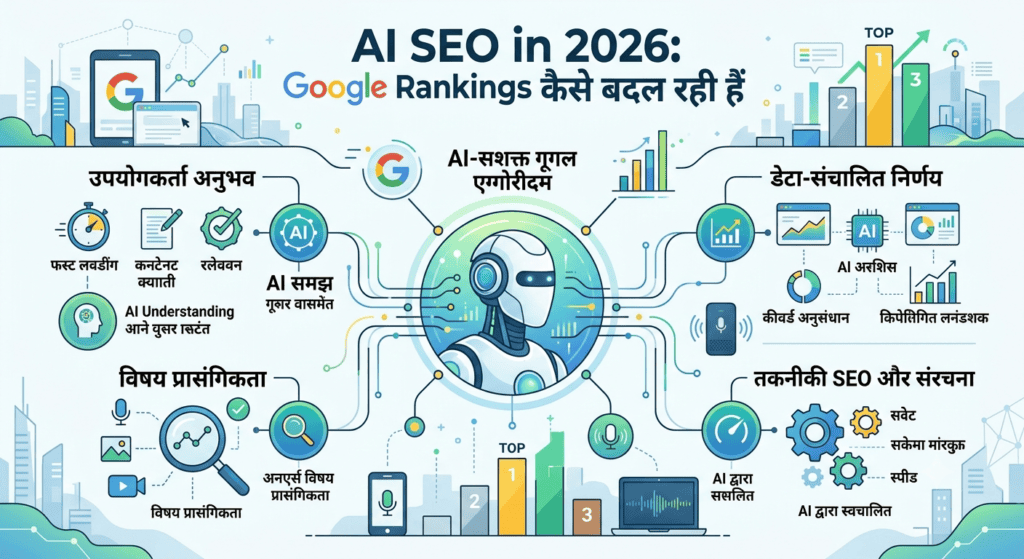
To make a plan for publishing on the internet you need to know how people find things online has changed. This helps you understand a few things:
The Main Goal Has Changed:
Old School Search Engine Optimization: Was all about being number one in the regular search results.
2026 Artificial Intelligence Search Engine Optimization: Now in 2026 the main goal is to get your website mentioned directly in Artificial Intelligence summaries and answer sections.
What You Need To Optimize For:
Old School Search Engine Optimization: Focused on trying to match certain words exactly.
2026 Artificial Intelligence Search Engine Optimization: Artificial Intelligence Search Engine Optimization is about understanding the topic, the context and what people are really asking. Artificial Intelligence Search Engine Optimization is also about entities and conversational sub-queries.
Making Content:
Old School Search Engine Optimization: The old way was to write a number of words and use keywords a certain number of times.
2026 Artificial Intelligence Search Engine Optimization: Now you need to give answers state clear facts and make sure people learn something new. This is what Artificial Intelligence Search Engine Optimization is about.
How To Format Your Content:
Old School Search Engine Optimization: Used large blocks of text and basic pictures.
2026 Artificial Intelligence Search Engine Optimization: Now Artificial Intelligence Search Engine Optimization likes content with headings that’re easy to scan, clean bullet points and detailed schema markup.
What Makes You Look Good:
Old School Search Engine Optimization: It used to be that how many other websites linked to you and how good your website was mattered most.
2026 Artificial Intelligence Search Engine Optimization: Now Artificial Intelligence search likes it when you show that you have experience and when other websites, around the internet mention your brand name. This is what Artificial Intelligence Search Engine Optimization is looking for.
5. Practical Action Plan: How to Rank in 2026
To make sure your content keeps ranking and gets organic traffic in an environment where Artificial Intelligence comes first you should follow this four-part plan for your content:
A. Start with “Answer Capsules”
Artificial Intelligence systems look for short pieces of text to answer questions right away. So you should put an direct answer in 2 to 3 sentences right after your main headings before you go into more detail.
B. Use Formatting that’s Easy to Understand
Make it simple for search engines and people who read your content to understand what you are saying:
Break up your paragraphs into 2 or 3 sentences at the most.
Use bullet points to summarize complicated information.
Use text to highlight important words and definitions the first time they appear.
C. Use Multi-Layer Schema Markup
When you use data it is like a map for Artificial Intelligence systems that look at your website. You should use more than the standard Article schema. Also use FAQPage, HowTo and Organization schemas to help Artificial Intelligence models understand what is, on your page.
D. Cultivate Off-Page Brand Mentions
To get your website noticed you need to cultivate off-page brand mentions. This means that search engines like Google do not just look at your website by itself. They also look at what people’re saying about your brand on other websites like Reddit, news websites and online forums.
If people are talking about your brand on these websites even if they are not linking to your website it can really help your website show up in search results. This is because search engines see that your brand is being mentioned on lots of websites and this makes them think that your brand is important.
The Verdict
The truth is that search engine optimization is not dead. It has just changed. Now search engines are smart enough to figure out when people are trying to trick them with quality content.
In the future search engines will reward websites that have quality content that is easy to understand and answers peoples questions directly. This means that you should focus on creating content that’s really good and shows that you know what you are talking about. If you can do this your website will do well even as search engines get smarter and smarter. Search engines, like Google are using intelligence to decide which websites to show people so you need to make sure that your website is the best it can be.